Meridiem #3: The mediocre growth of the Turkish economy reveals a lot

Turkish Statistical Institute (Turkstat) released the GDP growth estimates and data for the first quarter of 2026 on June 1. Quarterly data suggest a growth rate of 2.5 percent compared with the same quarter of the previous year. Still, the percentage change from the previous quarter was 0.1, heightening policymakers' fears that 2026 growth would not only be below the medium-term economic programme forecasts but also significantly lower than the Turkish economy's historical averages.
Why does that matter?
First, the growth data provide dire signals for the medium-term growth prospects. Despite the deepening of financial markets and the significance of construction and services in the Turkish economy, industrial activity offers the best insight into medium-term growth prospects.
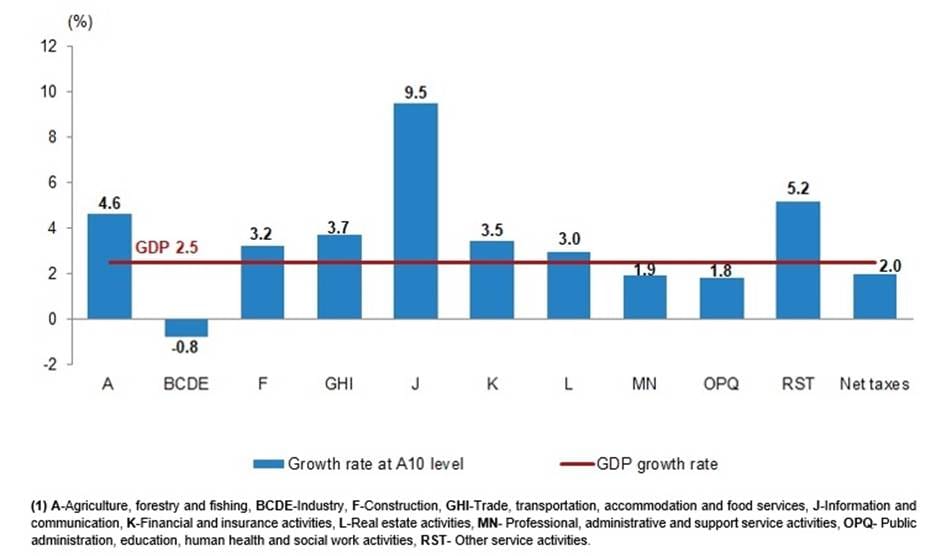
Below, I have pasted the graph released by Turkstat showing the percentage change across branches of economic activity in the first quarter of 2026. Notably, the 0.8 percent decrease in industry dragged down the overall growth rate. A jump in services cannot mitigate the industry's poor performance in the country.
Second, compared with the same quarter of the previous year, household consumption continues to make the largest contribution to growth, while growth in fixed capital formation is mediocre, with no prospect of changing the growth model that has become entrenched (or re-settled) in Türkiye over the last three years.
To remind, there was a brief episode of currency depreciation and heightened industrial policy discourse (labelled as the new economic model), boosting labour intensive, export-oriented sectors from late 2021 to mid-2023. Combined with previous episodes of currency depreciation, lower interest rates and specific incentives and cheap loans targeting new exporters in the 2010s, many observers suggested the early 2000s growth strategy in Türkiye was over. With the benefit of hindsight, we can now suggest that the export-centred growth strategy was shelved due to balance of payments problems, though the demands of similar sectors that supported the initiative remain, albeit weakened. The 2021-23 episode helped large industrialists in other ways (providing cheap lira credits to manage their prior foreign exchange loans) and definitely boosted the new exporters within Türkiye’s then-power bloc (the cemented yet contentious and dynamic bloc comprising various capital fractions and state elites under the dominance of certain components).
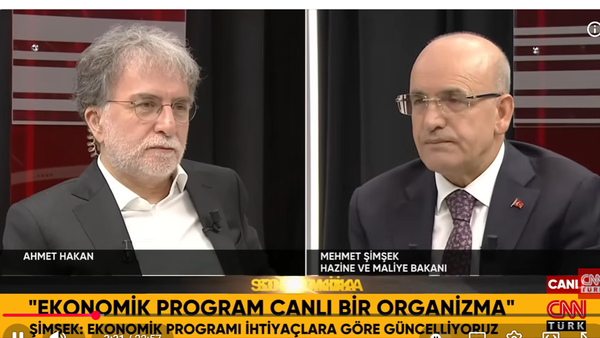
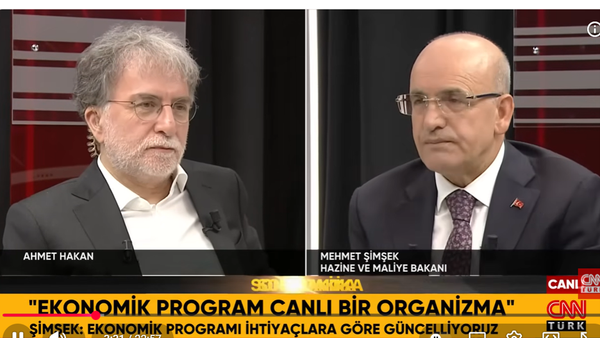
The new growth data provide further support for the idea that Şimşek’s program might have succeeded in preventing a balance of payments crisis but failed in many other respects, including providing a take-off platform for stable growth with a prominent role for investment.
Below, I present the average GDP growth rates and the average growth contribution of GDP components based on WDI World Bank data (2015 constant USD):

Even if we exclude the Covid-19 years (2020-21) or change the periodization to highlight the specifics of the 2021-23 episode, the averages change only marginally. My calculation demonstrates that, despite mostly positive net exports contributing to growth in 2014-19, the previous growth strategy (a version of which peaked in 2021-23) not only led the economy into further volatility but also failed to change the growth model itself (Those interested can read our 2024 piece for a richer analysis and comparison with Egypt of the 21st century strategies).
The new GDP growth data matters, maybe even more than in the previous few quarters, since the Erdogan administration has turned a new page in its authoritarian playbook (de facto closure of the main opposition party through a court decision appointing a collaborator as leader). The final point I would highlight is that the lower growth is a dynamite thrown at the Erdogan administration’s social support and the current configuration of the power bloc. It is highly plausible to suggest that no plebiscite (or electoral contest, even if it is hardly possible to portray the electoral playing field as anything but fair in Türkiye) will be seen until 2027.
Here is what to expect given these growth rates:
No matter how hard it is to control the narrative for the Erdogan administration under these circumstances, without social mobilization or an extraordinary event more impactful than the start of the 2026 US-Israel war against Iran, Şimşek's team and the current policymakers will continue with their plans (controlling public expenditure, suppressing demand of low-income groups and lowering inflation to higher 20s by late 2026 with the help of mildly positive interest rates). However, without benefits and signals indicating that the authoritarian leader is concerned and addressing the electorate's demands, the political regime would suffer tremendously. We should expect, by autumn 2026, if not before, comprehensive incentives and targeted credit programmes to mitigate the blows of geopolitics and the Şimşek program. Without credit expansion to stimulate household consumption (which will follow in 2027), these moves will not amount to signals for a snap election/plebiscite. Ironically, the same measures to mitigate the Şimşek program’s ramifications might aggravate foreign exchange hoarding by small and medium-scale producers similar to the ones we observed in 2016 and 2018.
We should also anticipate that the power bloc will be like a boiling pot. Unfortunately, many political pundits will equate discontent with the Şimşek program with disdain for policies that might eliminate the main contenders of the Erdogan administration (Ozel-Imamoglu team). It is not the suppression itself, but the possibility that the suppression will not deliver a tamed opposition, that the power bloc components dislike the most.
Highlight:
US Senator Bernie Sanders introduced two bills that would allow the federal government to seize 50 percent of the outstanding equity in large AI companies and create a sovereign wealth fund: AI Data Center Moratorium Act and American AI Sovereign Wealth Fund Act. The same week (while I was drafting this newsletter), Canada’s PM Mark Carney released an AI strategy: “AI for All”. Two opposing lines, but both will contribute immensely to how AI is discussed in the coming months. For a vague representation of the dominant line, you can check the Carney strategy document. I will be tracking AI strategy documents from the global South with a specific emphasis on cloud sovereignty.
Article:
I have been following the scholarly pieces on the demise of the “liberal rules-based international order” and failures of international law and humanitarian governance against the backdrop of the genocide in Gaza. The special issue of Third World Quarterly has just been published. There are a few open access articles. You can check The Gaza Genocide and the Crisis of the Global North, edited by Ibrahim Fraihat and Abeer Al-Najjar, and start with the introduction of the special issue: https://www.tandfonline.com/doi/full/10.1080/01436597.2026.2672512
Since I was busy with a job interview, I could only listen to a few Turkish podcasts, so I am skipping the podcasts and the popular culture section for this issue.