Meridiem #5: What is new under the political regime of Türkiye?

Brace yourselves, because we are going to spend the next ten minutes discussing seemingly abstract concepts (the form of regime and the form of state) and how we can apply them to the current Turkish political context.
As a presidential advisor, Mehmet Uçum wrote earlier this week in Türkiye’s official news agency that the ideal time for elections in the country was the spring of 2028, the Speaker of the National Assembly was busy reiterating his (and some circles in the Erdogan administration) wish for a new constitution.
National Assembly Speaker Numan Kurtulmuş stated that they would initiate a new constitution process, adding: "I seem to hear those who say from left and right, 'there is no constituent power'. Their concern is not to grant the nation a title and power as a constituent power."
Based on these statements, it is easy to suggest that everything seems like a replica of the previous years and months. But something has changed within Türkiye’s political landscape in the past 15 months. It is not the final countdown to a sultanist setup or the completion of an Azerbaijan-style autocracy, as some observers suggest. Indeed, many concerned commentators address only part of what is ongoing in their commentary. To make sense of what is new under the political regime of Türkiye, we need to dive deeper into seemingly esoteric but very useful concepts of form of regime and form of state.
A change in regime form (using historical materialist literature on the topic and updating the debate in the given context) refers to the interplay among political parties/groups, and the interactions among the major branches of the state (executive, legislative, and judicial institutions). A form of state, however, goes beyond such interactions. It concerns how the state intervenes in capital accumulation and moulds its citizens. These two nexus points define the characteristics of the state's form, but a fundamental (and certainly not ephemeral but a sustained and significant) change in one of them might be sufficient to denote a new form of state. Some forms of the state commonly analyzed in the political science literature in the last fifty years include welfare states, developmental states, and authoritarian neoliberalisms. As is the case with taxonomies and such categories, it is possible to add several other forms of state, given the diversity of state interventions in capital accumulation and forms of integration into the world economy, as well as the swinging practices across the board, from democratization to authoritarianism, in various nation-states.
Authoritarian regimes rely on cooptation as much as coercion and suppression to reproduce themselves. When I use the term "regime" in this newsletter issue, I am mostly referring to the rules and institutions that govern the interplay among political groups. That is not so far away from popularized uses of the term in mainstream political science. But the mainstream line of political science research is not interested in the state-capital-citizen nexus and how the form of regime functions within such a matrix, nor does it envision alternative political movements and spaces. Only critical concepts can be harnessed to clarify these aspects of state intervention, restructuring, and alternatives.
The interesting dynamics most authoritarian regimes display are the combination of apparent strength and inherent fragility, both stemming from the constant suppression of certain political groups and exclusion of not just marginalized groups and minorities but also the representatives of labour organizations from decision-making. In Türkiye, which I like to use as an example, when discussing various tendencies in the global South and authoritarian regimes, the ongoing shift within authoritarianism is now being portrayed in terms such as undermining the electoral field, a move toward sultanism, the end of multi-party politics, and so on. By overemphasizing one facet of the shift, these terms suggest a doubling down in political exclusion. But such terms, despite their descriptive and image power, fail to provide a full picture, derailing political debate.
What is new, and what has been ongoing for a decade?
It is true that the current moves by the Erdogan administration serve to create a landscape in which the dominant ruling cadres never lose elections. These elections in Türkiye have indeed been plebiscites since the 2017 referendum, confirming the regime’s dominance. But it is not true to suggest the end of electoral politics or multi-party politics since elections/plebiscites in Türkiye will nevertheless continue to be held, and political parties are still of key importance despite their crisis under the super-presidency. The current moves disenfranchise millions of people by removing their representatives from their elected posts, but it is not new under Turkish authoritarianism. Without any new mobilization, the electoral turnout in the upcoming elections will likely be very low, but let me repeat, since this point seems to be forgotten: there is no indicator that means the elections will not take place; on the contrary, there is a roadmap for the upcoming elections, which we learn the details of week by week. Finally, there is an unprecedented concentration of power in the hands of super-presidency, but this is also not new and does not imply the end of the republic in Türkiye as we know it.
So the moves coming from the Erdogan administration, targeting the main opposition party and various other parties (since the future split of the Republican People’s Party — RPP — will also immediately rearrange the political activities, discourse surrounding it, and support given to at least 10 other parties), amount to tilting the electoral playing field once again. It reflects the crisis within both the RPP and the Justice and Development Party, while also symbolizing the new methods of authoritarian cooptation against a backdrop in which elections lost their previous meaning long ago.
So, is there anything new under the sun (or within the political regime of Türkiye)? Yes, there is. The new feature is that millions of supporters of the RPP and various dissident groups, previously convinced that the elections might bring an end to the Erdogan administration, are now losing faith in the electoral process itself. For the sake of simplicity, I would refer to this change as a loss of faith in a Hungary-style transition. It is no coincidence that following Uçum’s column, several Justice and Development Party figures began discussing who would lead their party and, eventually, the state in the 2030s, or even in the run-up to elections. Over the past 15 months, the dissidents' hope of replacing the Erdogan administration in Türkiye has almost disappeared, as the main candidate in the presidential elections has been arrested and the main opposition party is still split. The frenzy surrounding the displaced leader Özgür Özel might fade out in a few months.
Does this mean that some elites are building a sultanistic regime in 2026? Not exactly, since what some commentators describe as sultanistic moves indeed started long before. Among key turning points was the imprisonment of Selahattin Demirtaş (who was indeed a presidential candidate and received almost 10 percent of the votes in 2014, and emerged as the major symbol of resistance against the emergent Erdogan administration and new form of regime in 2015-16). Hollowing out elections (for the lack of a better term to denote disenfranchisement through removing alternatives and putting them in prison) has also at least a decade-long life, starting from the mid-2010s violations and trustee appointments as well as the imprisonment of Kurdish representatives in the mid-2010s (and even earlier); the 2014 violation of the constitution by the newly elected president; and the state of emergency measures from 2016 to 2018 (the list can be extended).
So how should we understand these complex moves, manoeuvres, reiterations, and changes? It is better to refer to the change by its basic characteristics: what we observe in 2025-26 is the split of the major opposition party, which would not only serve as the main hub for a post-Erdogan transition but would also most likely attract many regime pundits on the road to the 2027-28 elections/plebiscites. Could there be something beyond just losing faith in the electoral process and taking apart the main opposition party? Is there a deeper issue at play? The answer is yes.
What is going on fosters the not-happened-yet-but-expected transition to a new form of state. The form of state in Turkey has assumed authoritarian and neoliberal characteristics since 1980. The regime, however, changed several times under this form of state (I have my own taxonomy and periodization, but since it would invite more controversy, I am setting aside Türkiye’s regime periodization for now). The current regime form we have dates to 2017-18 (2017 referendum and 2018 presidential elections). The political parties lost a great amount of power in the post-2018 regime, and the executive branch not only dominated the others but also dictated every decision under Erdogan’s super presidency. I have been writing about this for at least five years now, referring to the new economic model experiment of 2021-23 and the calls by Erdogan and his close circle for a new constitution in the 2020s. Based not only on such calls and experiments but also on the decisive political intervention to establish a consolidated and very restrictive plebiscitarian autocracy, it is likely that we are amid the final steps of a change in the form of state.
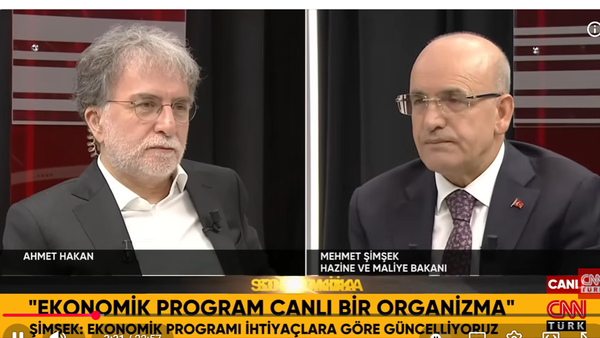
The end of faith in a Hungarian-style transition might symbolize this transition as one of a thousand steps enacted toward changing the form of the state in the last decade. I tend to read this situation as an open-ended process, so it is not over yet. Two years of torture, arrests, killings, and military rule following the coup d’etat in 1980 resulted in, back then, the emergence of authoritarian neoliberalism as the state form in Türkiye (these were preceded by massacres and the spread of torture in the late 1970s and a crisis of the state); this current and expected transition in the 2020s is taking much longer. If the split of the main opposition party is followed by new arrests and further diminishing political organization capacity of the contenders, as well as the 13th president and his aides, hand-picked by Erdogan and his close circle, this might be sufficient to call the new form of the state a quasi-fascist, a plebiscitarian autocracy (for the lack of better terms to describe this new form) at best. The form of state might be coupled with a form of state intervention in capital accumulation that is significantly different from the Şimşek program or a modified version, since the Şimşek program prevented a new balance of payments crisis in 2023-24 while proving such austerity was unsustainable in the long-term. We should expect the new form of state to be reflected in a new constitution (the one that Erdogan frequently called for in the early 2020s and that the Speaker of the National Assembly has sought since 2023), but it remains to be seen.
To wrap up, I need to underscore the dynamics of regime and state form. A change in regime might pave the way for a change in state form, but such a change is not an automatic extension or precedent for implementing a new state form. In the Turkish case, the organic crisis of the Turkish state in the 2010s has resulted in a regime change (from restricted parliamentarism to a super-presidential regime in 2018). It did not resolve the organic crisis of the Turkish state and increased the likelihood of a change in the state form. We have been witnessing further steps by policy elites toward a new state form since the start of the new regime in Türkiye in 2018. I am not convinced yet that the policy elites of the conservative/fascist bloc achieved their target. But there remained no significant barriers to their success in the coming years. In 2025-26, we have been witnessing a new arrangement that is about to bring both a change in regime and a new matrix of state-capital-citizen relations (a new form of state). We can call the new beast growing before our eyes, day by day, an authoritarian state 2.0, until we find a better label.
Highlight:
While political observes discuss the U.S. failure and the memorandum of understanding between the U.S. and Iran, something more significant took place last month. In their analysis, Kate Mackenzie and Tim Sahay discuss the failure of the U.S. to decouple allies from China and how the U.S. steps push many closer to Beijing, leading ultimately a cooperationist outlook coming to the front even within the Trump administration. Worth checking out: The Beijing Pivot (June 12, 2026)
Article:
Akif Avcı’s article “The Gang is Bigger Than Five”: A Critical Analysis of State–Capital Relations in Turkey” is published in the Journal of Contemporary Asia for advance access. Given the Kılıçdaroğlu move and the authoritarian co-optation in recent years, it provides a timely reminder that analyzing state-capital relations from a critical perspective and using historical materialism as research methodology equip us to counter the misleading discourses also employed by once-opposition leaders.
Video/podcast:
Did central planning fail? Should critical commentators and academics suggest that central planning does not have a place in the future of socialism? The perspective on ineffectiveness, inefficiency, and information failures explaining the demise of the Soviet Union and central planning is quite weak for several reasons. This perspective once again came to light following Vivek Chibber’s interview with Jacobin, titled Socialism Has a Future. Central Planning Doesn’t. Chibber’s own use of per capita income and reference to burden on the planner as criteria to describe efficiency is very problematic, but even if we use similar criteria, the argument does not hold. For a good summary and critique, you can watch Paul Cockshott’s video here: A Reply to Chibber.