Meridiem #2: The cost of ousting the leader of the main opposition party in Türkiye: Not what you might guess


On May 21, the leader of Türkiye’s main opposition party, who ranked first in the polls, was ousted by a court decision. The party’s headquarters was attacked on Sunday (May 24) by a few supporters of the newly appointed leader (the former leader and the presidential candidate) and police forces after the party's accounts were frozen.
The limbo will end in the next few weeks, as the official powers of the party leader, which include launching disciplinary investigations against members and postponing a possible party congress for years, will be exercised by the appointed leader, Kemal Kılıçdaroğlu. Or he will simply refer to the court order, which prohibits any further action regarding the party leadership.
The operation is significant and deserves attention, given that the party in question (Republican People’s Party, RPP) and the presidential candidate supported by RPP would be the main contenders against the Erdogan administration in the upcoming elections (officially set for June 2028, but will almost certainly be held earlier, most likely in 2027). The design of opposition and the possible candidate against the Erdogan administration also concerns the nature of the political regime in Türkiye, which I will analyze in the upcoming pieces.
In the first issue of the newsletter, I mentioned that we would witness new heights of pressure in the coming weeks and months, as the Erdogan administration's roadmap becomes clearer.
The political economic costs of such an intervention and the expected new investigations against RPP mayors and some prominent figures, including the ousted leader Ozgur Ozel, are being widely debated in Turkish circles. I will clarify the most stressed points in this issue:
Every political intervention and the marginalization of opposition figures are followed by turbulence in foreign exchange and bond markets, and adjustments in monetary and fiscal policy.
Net Central Bank reserves excluding FX swaps were around 37 billion USD before the court decision. After the Bayram pause, it is expected that the depreciation pressure on the Turkish Lira will increase. Still, as in previous episodes (including March 2025, when a technical delay after the arrest of the Istanbul mayor and RPP’s new presidential candidate led to a collapse that was later reversed), the Central Bank will use reserves and public bank transactions to mitigate depreciation.
We have no information regarding the guarantees offered by the Minister of Finance and the Head of the Central Bank in their London negotiations on May 21 and the following days, but they can use this ousting and the volatility to increase the official policy interest rate (similar to the rate increase following the March 2025 arrests).
2026 GDP growth expectations have already been lowered, and the inflation target will also be missed. The discontent among Erdogan’s social and economic base will grow further and be reflected in the headlines of newspapers such as Yeni Şafak. Still, not the possible tensions within the power bloc, but the fact that such turbulence is mostly characterized by lower capital inflows has been the main point emphasized in some critical commentaries. These mainstream commentators and dissident but hegemonic perceptions suggest a correlation between the capital inflows and the democratic character of the political regime (as if we are living in the late 1990s). No such correlation exists in the 21st century (and it was already debatable in the late 20th century), as has been repeatedly shown by scholarly studies. In the Turkish case, the foreign direct investment inflows during the state of emergency from 2016 to 2018 averaged almost 10 billion USD annually. Even though the quality of the investment deteriorated further, it was clear that the anti-democratic measures, such as the dismissal of thousands of public servants without any investigation and the installation of a super-presidency as a new political shell for Turkish authoritarianism (2017 to 2018), did not prevent many investors from putting their money where their anti-democratic mouth is. This popularized correlation between capital inflows and democratization has no explanatory value, and no one should expect a dramatic decrease in capital inflows due to the new autocratic measures.
If we see lower capital inflows, it will reflect various geopolitical risks and monetary policy choices in the core capitalist countries of the global North in 2026. It is now certain that higher inflation and lower GDP growth than in 2024 and 2025 will be recorded in 2026. We can also expect to hear more critical voices from the conservative benches, reflecting tensions within the Erdogan administration and the manoeuvres regarding a post-Erdogan landscape (I will explain such attempts in other pieces).
But the political and economic costs of ousting the leader of the main opposition party, designing the main contender and co-opting many former notables who would supposedly support an alternative political figure in elections and plebiscites, and turning another page in the Turkish autocratic playbook are lower than portrayed by dissident liberal elites and their political commentators.
Here are the indicators that we should pay attention to in the next few weeks:
Reserves: The alarm bells will ring for the economic policymakers if the reserve loss in the next few weeks exceeds 25 billion USD. The first calculations by market observers demonstrate that reserve losses exceeded 10 billion USD in the first few days. We must watch the depreciation of the Lira and the backdoor orders closely.
Policy rate: The Central Bank raised the effective interest rate by 300 basis points, thereby increasing the average funding rate, following the US-Israel war against Iran, but the Monetary Policy Board did not raise the official policy rate. The board will reconvene on June 11. It is highly likely that the official rate will rise by a few hundred basis points, but the cost of funding will rise more. This will be an unofficial sign that the political turbulence will continue, or at least that is the perception of board members, even though they will not refer to the domestic political landscape in their press release.
Dollarization: Türkiye’s main problem following the 2018 currency crisis was household asset dollarization, which effectively ended in 2022 after another currency shock in late 2021 and a new measure protecting Turkish Lira deposit accounts against currency depreciation. Even though it is highly unlikely that demand for USD or other hard currencies will grow over the next few months, the memory of the post-2018 slide still haunts policymakers. The CB's macroprudential measures (i.e. credit squeeze steps) on May 23 was also a preventive measure in this regard. Household asset dollarization and the accompanying measures by the Central Bank are the third set of crucial indicators we should monitor regularly in the coming weeks and months.
Highlight:
Anissa Bougrea received the Emerging Scholar Research Paper Award on Public Development Banks in 2026. The article “The European Investment Bank in Sub-Saharan Africa: constrained expansion” provides a great analysis of EIB operations, taking into account several factors from the recent EU development policy focused on mobilizing private capital to competition among development banks in Africa and Europe’s colonial ties.
Video/podcast:
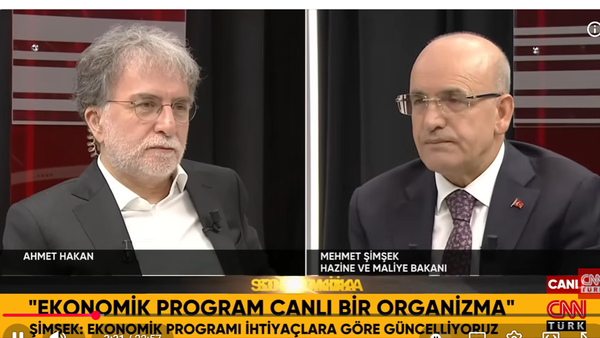
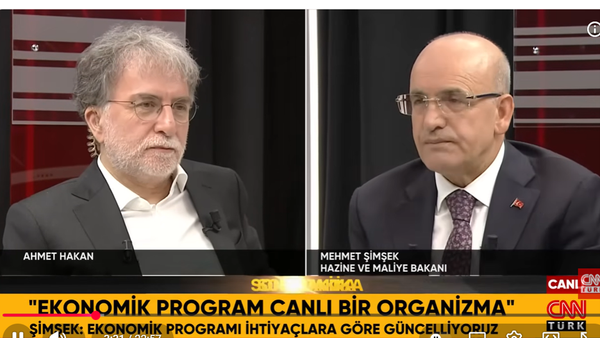
We discussed the cost of the ousting of the leader of the Republican People’s Party a few hours after the decision was released. You can watch using auto-translate (this was a long stream, but I recommend the parts from 1:19:30 to 1:38:00): https://www.youtube.com/watch?v=fp9vI71zx5Y&t=4762s
Popular culture:
The City of Vancouver released a human rights action plan as the World Cup 2026 approaches. The Plan is a summary of the already existing policies, and observers and activists are concerned that the World Cup will reinforce the displacement practices and the discrimination against people suffering from homelessness. This will be a hot topic for Vancouver and similar cities across North America, serving as small test grounds to observe evolving surveillance and control related to mega-events.